
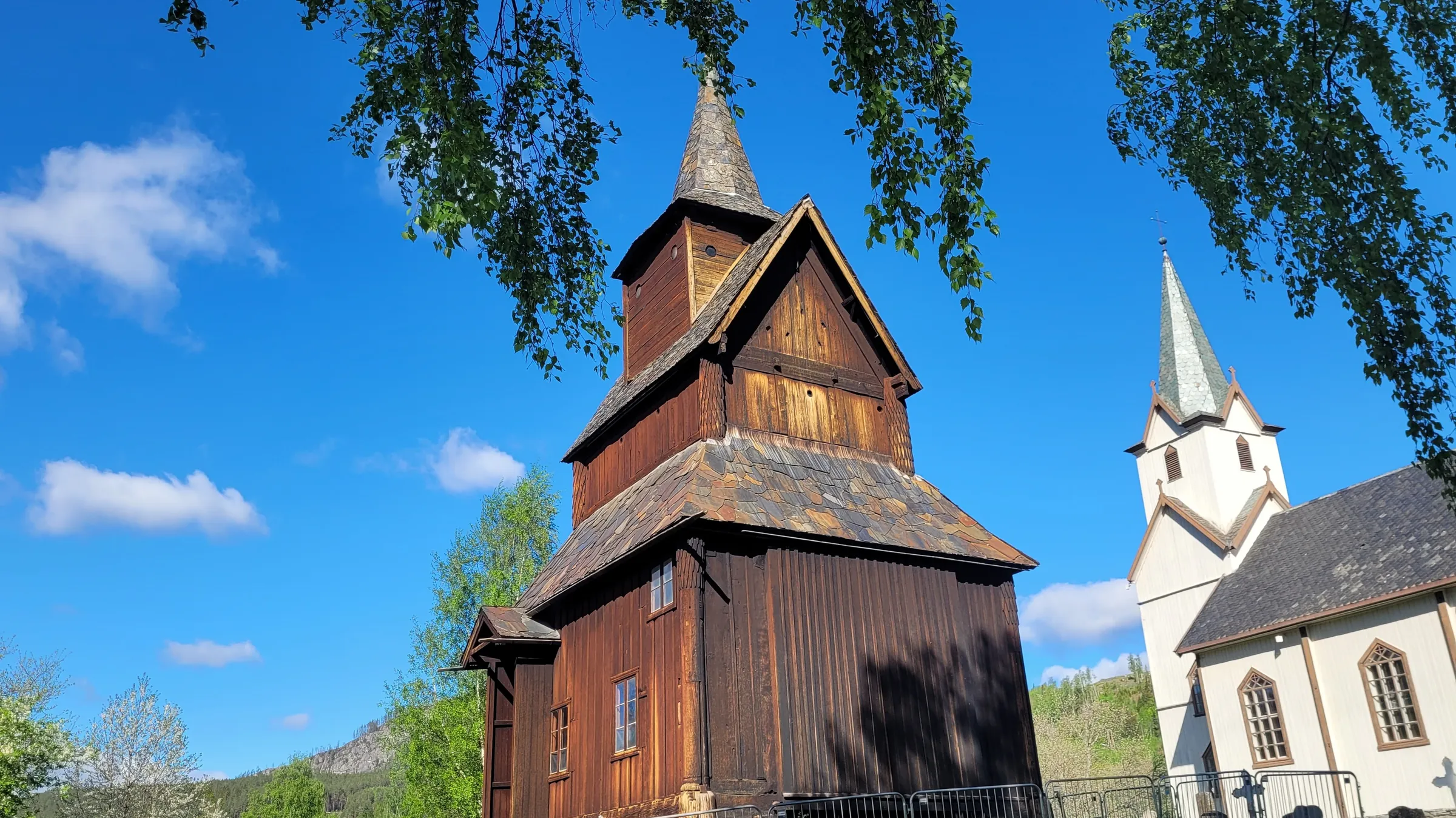
Torpo Stave Church
A unique baldachin and the legend of Margaretha
The only surviving stave church in Hallingdal, Torpo Stave Church stands today as one of Norway’s oldest and best-preserved medieval buildings. Beneath the high church ceiling, we encounter rare and remarkable paintings on a richly decorated baldachin. And carved runes in the church furnishings proclaim: “Torolf made this church.”
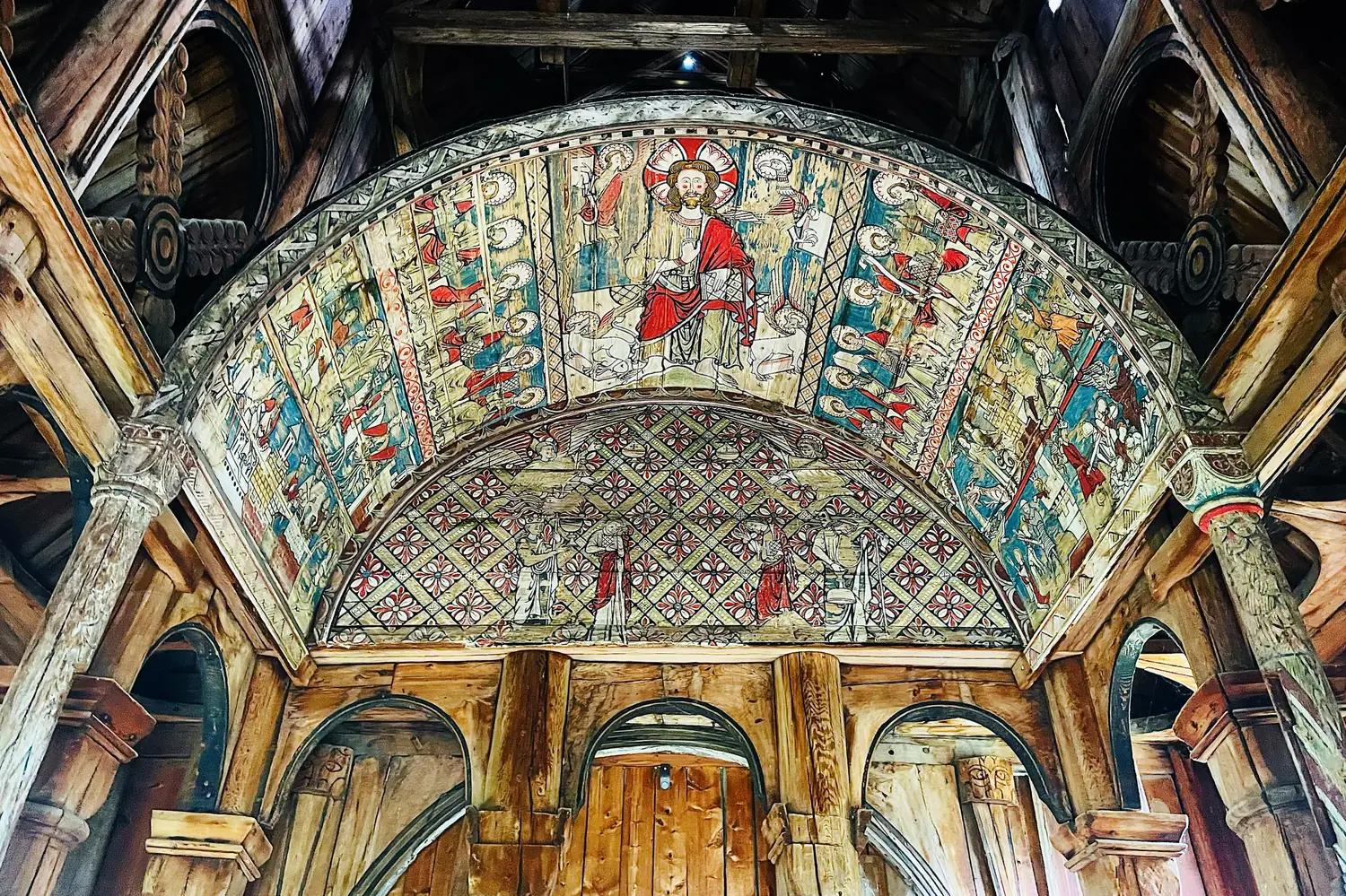
Stories Beneath the Baldachin
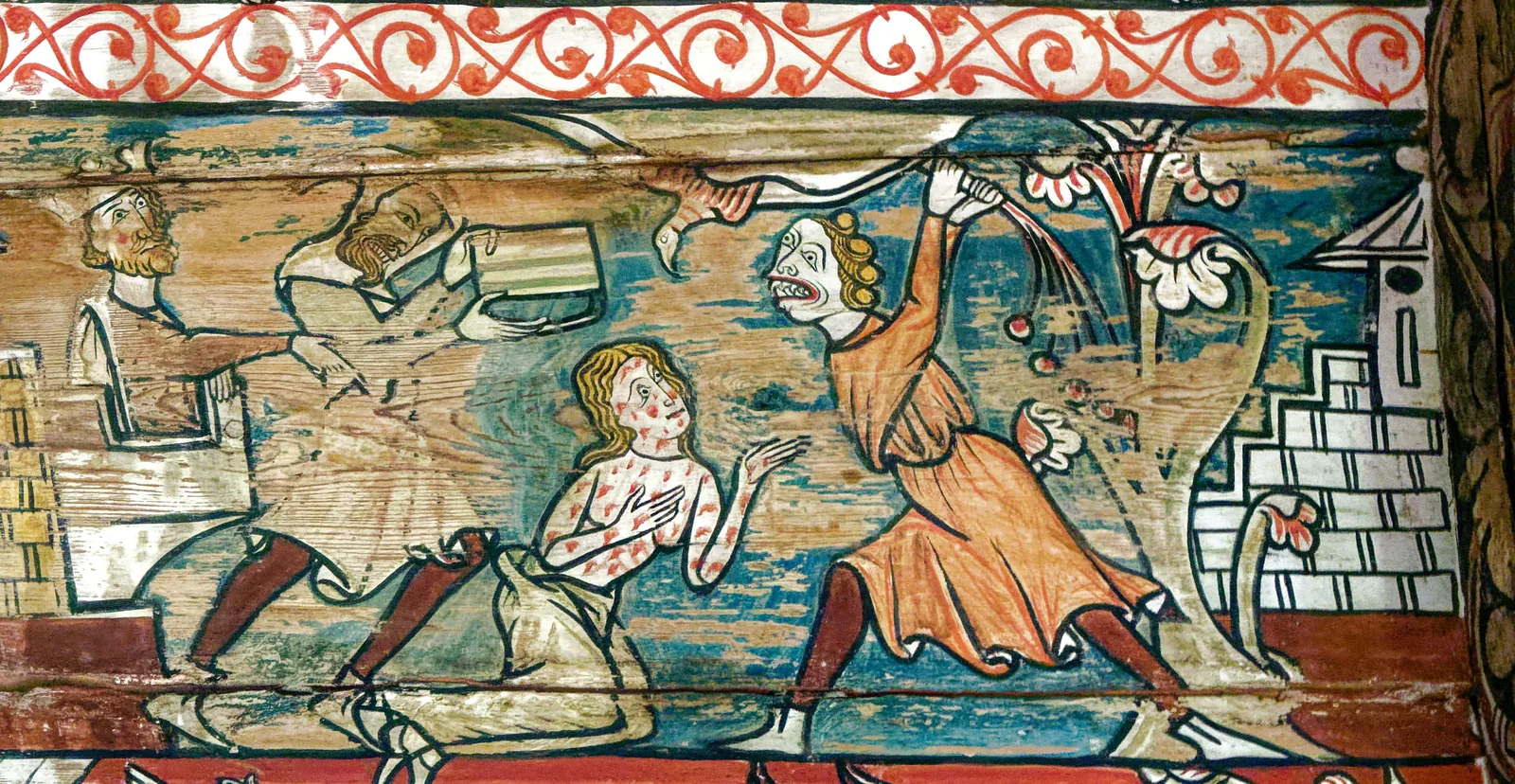
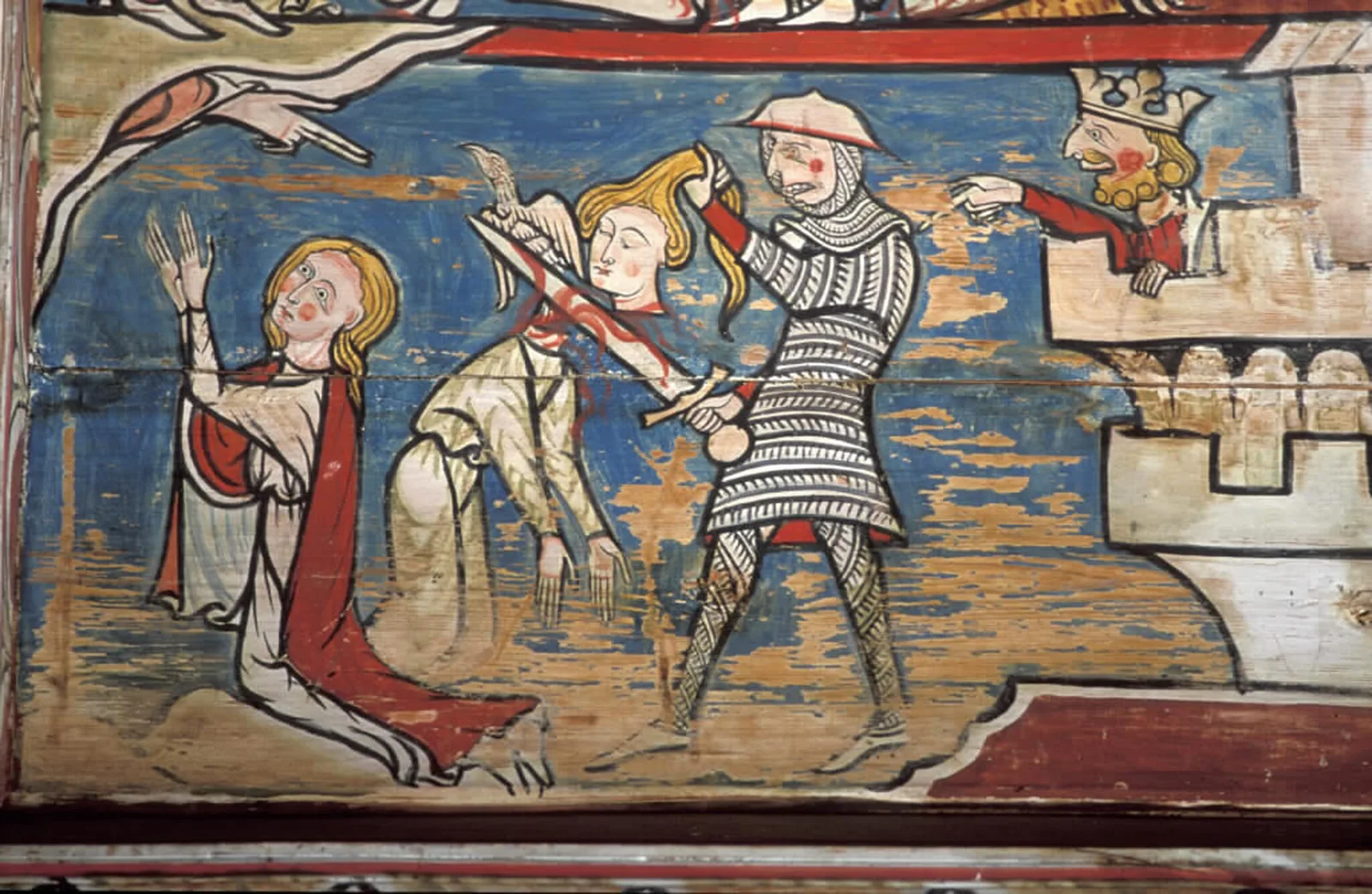
Under the curved barrel vault, vivid medieval imagery unfolds. The colours are clear and luminous. A rosy-cheeked and serene Christ is surrounded by the apostles, while much of the painted decoration is devoted to the legend of Saint Margaretha.
According to the legend, Margaretha was persecuted and tortured by the spurned pagan suitor Olybrius, a prefect serving Emperor Diocletian. Several brutal execution attempts failed, as she was miraculously saved time and again, until she was finally beheaded. Margaretha of Antioch is said to have died in the year 305.
The story concludes with her soul ascending to heaven in the form of a dove, while Olybrius’ distorted soul is carried off to hell by a small demon. A dramatic medieval reminder of divine justice.
Powerful Dragon Style
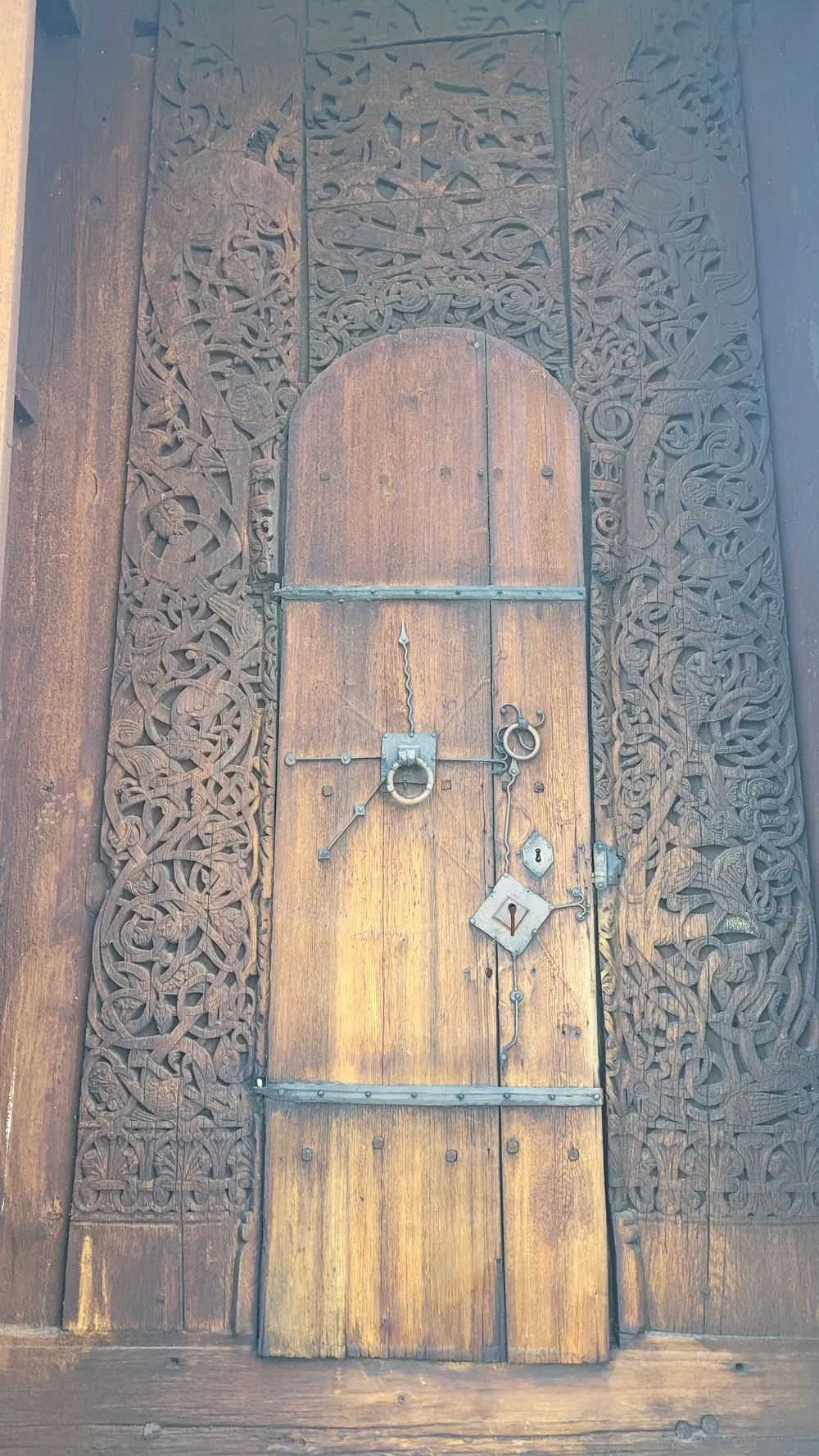
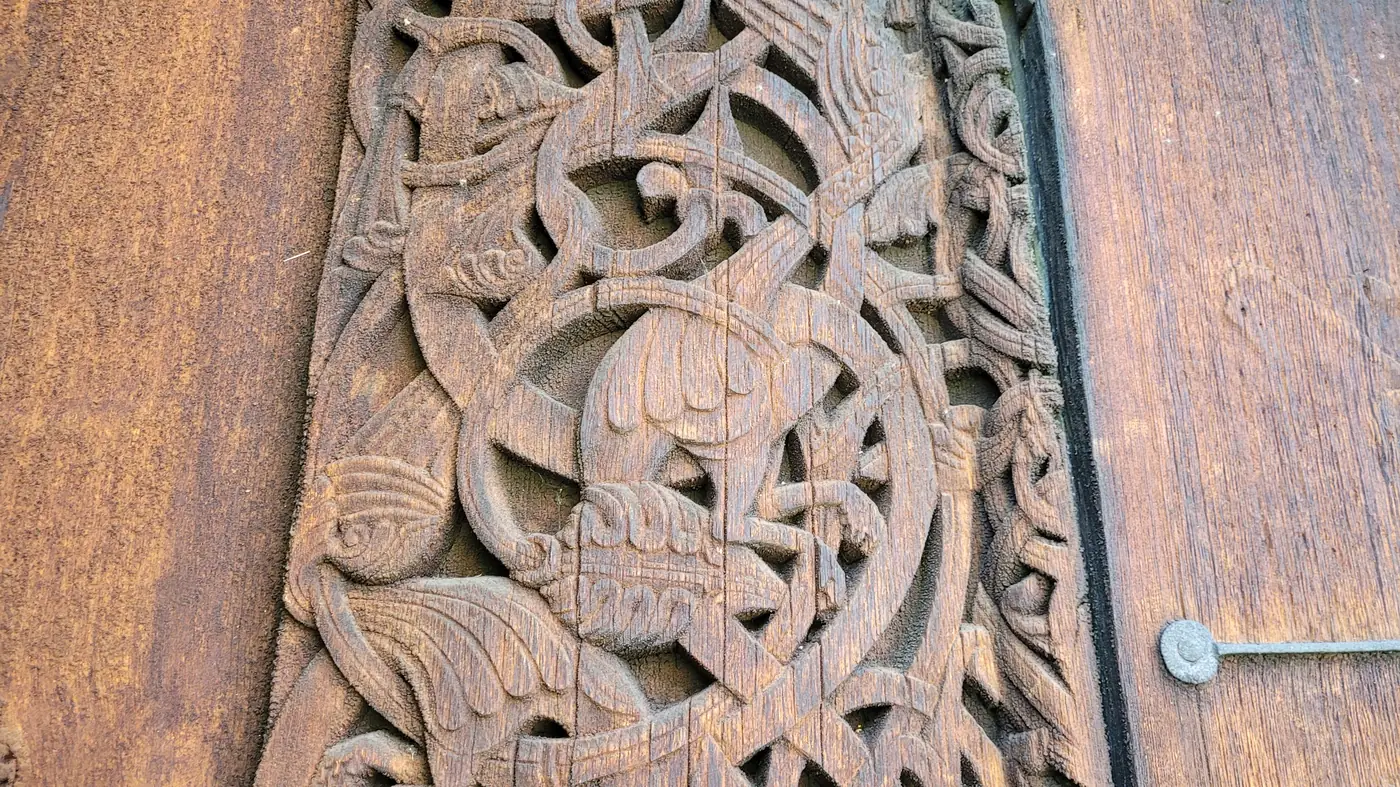
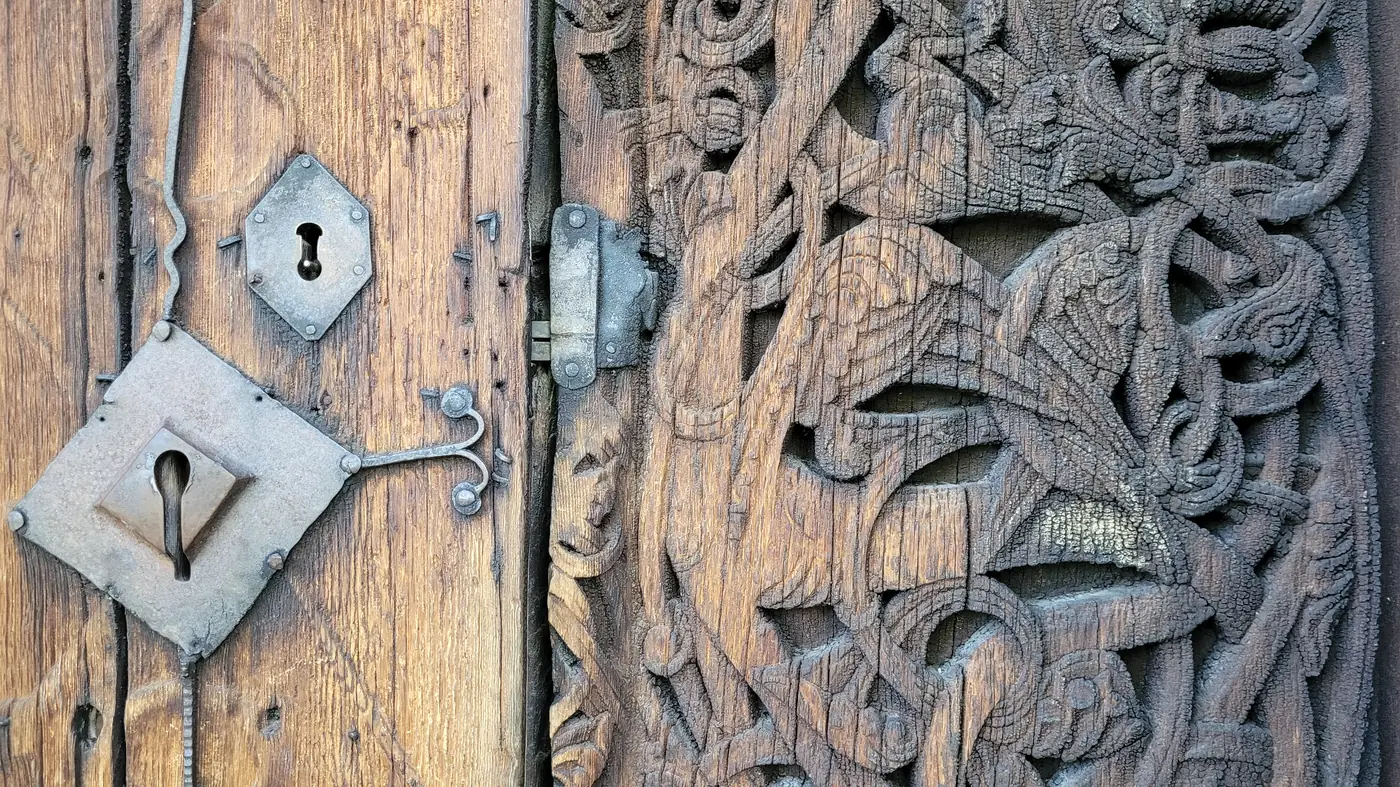
There is no doubt about its beauty. Intricate carvings in the classic dragon style—the artistic tradition mastered by the Vikings—adorn the structure. The doorway alone is so richly detailed that one can stand there for a long time, discovering new elements in the wood all the time.
The Builders Who “Tagged” with Runes
The craftsmen behind Norway’s stave churches were highly skilled professionals. Some chose to leave their mark. In Torpo, a runic inscription was discovered on a wall:
Torolf
made this church
Åsgrim · Håkon · Erling · Pål · Eindride · Sjaunde · Torolf
Tore
Olav
Torolf was likely the master builder, the others his apprentices. He may also have led the construction of the now-lost Ål stave church, where a similar inscription was found. Clearly an expert, he may have travelled between commissions, working alongside local carpenters. And he was a man that liked to leave his mark.
Saved from Demolition for 280 Kroner
Stave churches once stood throughout Norway. Most were dismantled or destroyed. Torpo stave church survived. Though in a somewhat reduced form.
In 1880, the chancel was demolished. The rest of the church was also going to be demolished, but the Society for the Preservation of Norwegian Ancient Monuments purchased the nave to preserve it.
During the great church sale of 1723, Torpo stave church passed into private ownership. In 1880, the chancel was demolished, and the rest of the church was destined to follow.
The Society for the Preservation of Norwegian Ancient Monuments, Fortidsminneforeningen, strongly protested what they saw as vandalism. The municipality instead decided to construct a new church. While the new church building was underway in the summer of 1880, the stave church choir was demolished and materials removed for reuse.
That autumn, the Association was allowed to purchase the stave church for 280 kroner, on the condition that it would be maintained on site.
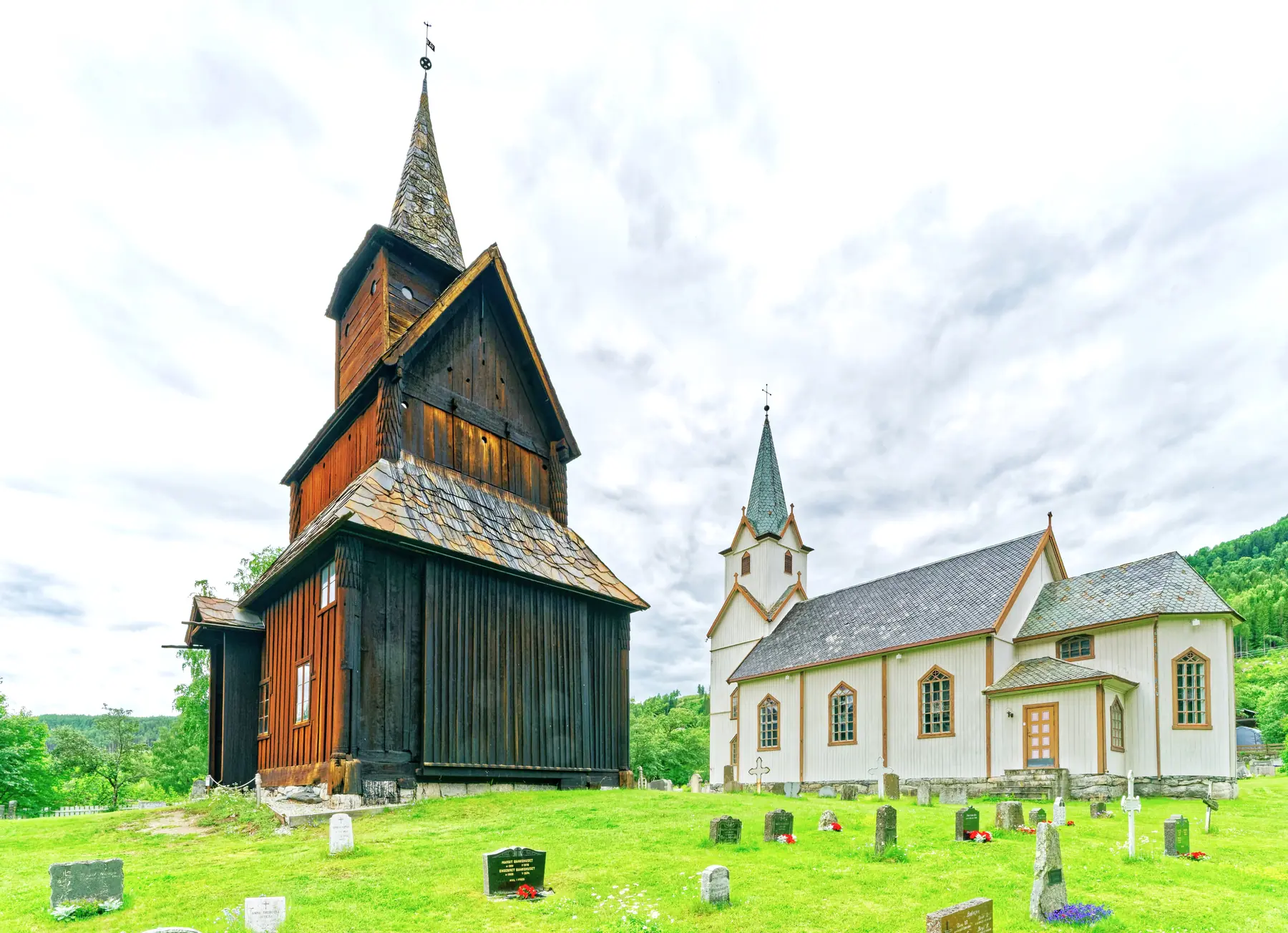
Today, the two churches still stand only metres apart. They look good together and are at the same time a striking visual contrast between two architectural eras in Norway separated by hundreds of years.
Is a Bishop Buried Here?
The wide, ancient floor planks creak gently underfoot. In the centre of the nave, the outline of a full-length human figure is carved into the floor. It appears mysterious. An unconfirmed theory suggests it marks a grave. Most likely that of an old bishop.
A possible bishop’s grave, unique paintings, runic inscriptions, and masterful woodcarving: Torpo Stave Church continues to offer its visitors memories for life.
A baldachin painted with the legend of Margaretha, runes left by a master builder, a church saved for 280 kroner. Torpo holds eight centuries in its timbers.
More heritage stories →