Jól: Christmas the Viking Way
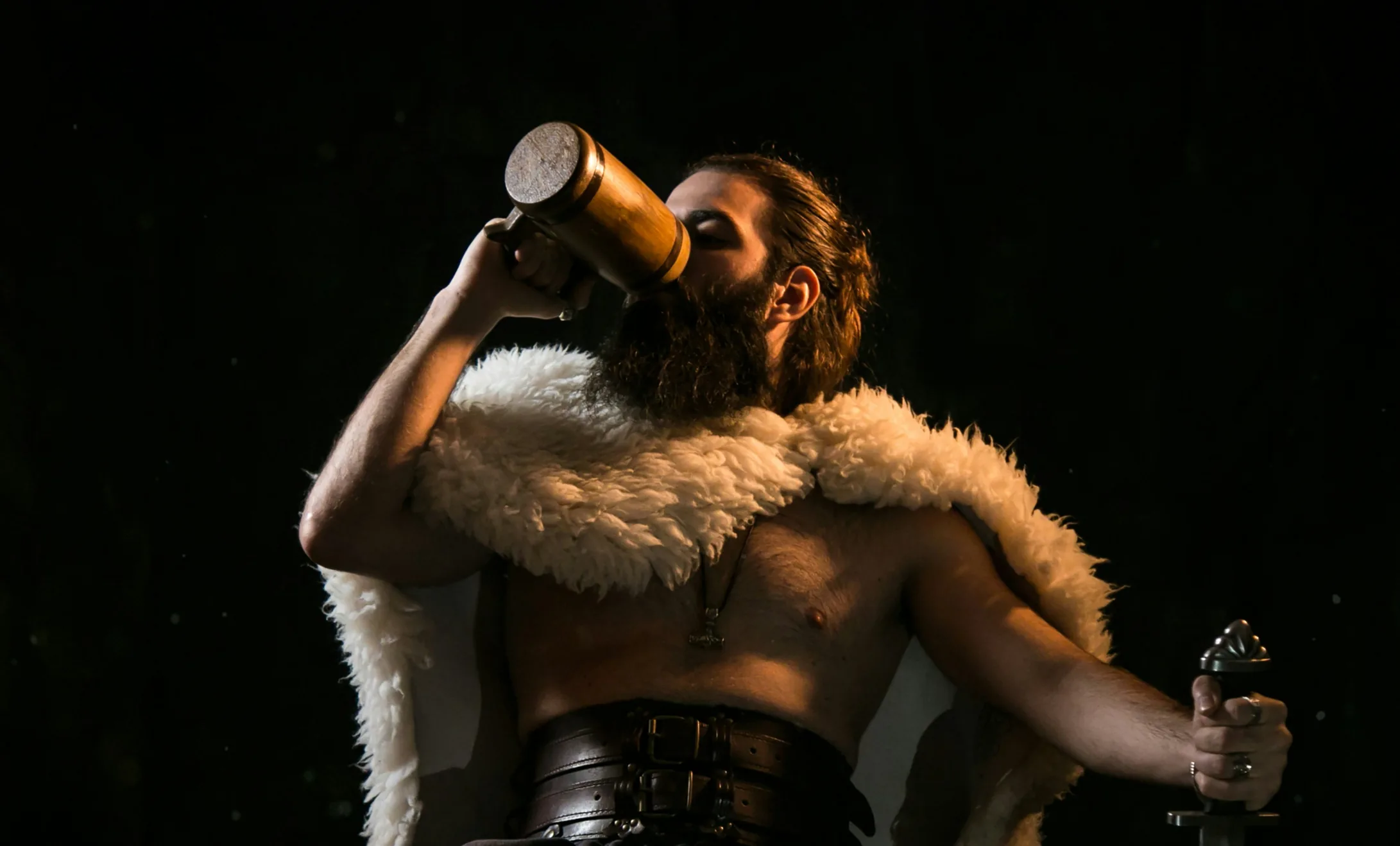
Long before Christianity made its way to Norway, the Vikings celebrated the jolly season in their own manner. They drank jól – and it was far from giving presents to sweet kids. It was mead, slaughter, and feasting Viking style. Jól was both celebration and fear, darkness and light.
The Word “Yule” – an Echo from the Vikings
The Norwegian word for Christmas is jul (yule). It comes from the Old Norse jól, the midwinter celebration known as jólablót. This was a blood offering and feast held around January 12th.
The blót consisted of a huge communal meal. The old Norwegians needed energy rich food during the dark winter season. The more fat, the better! Being that the pig was Freyr’s sacred animal, pork was served at the feast. Still to this day, pork roast is still served as Christmas food across much of the Nordic region today. This tradition may therefore have survived for a thousand years.
But back to the Vikings. What exactly did they celebrate?
Scientists aren’t entirely sure. Some believe jól was a two-part celebration: first a feast to honor dead ancestors, then a celebration marking the start of the new year. Others claim it was held in honor of the sun, urging it to return. Many researchers point to the fertility god Frøya (Freyr). Most likely, several layers of belief and custom rested atop each other.
The Jóleblót – Three Days of Partying
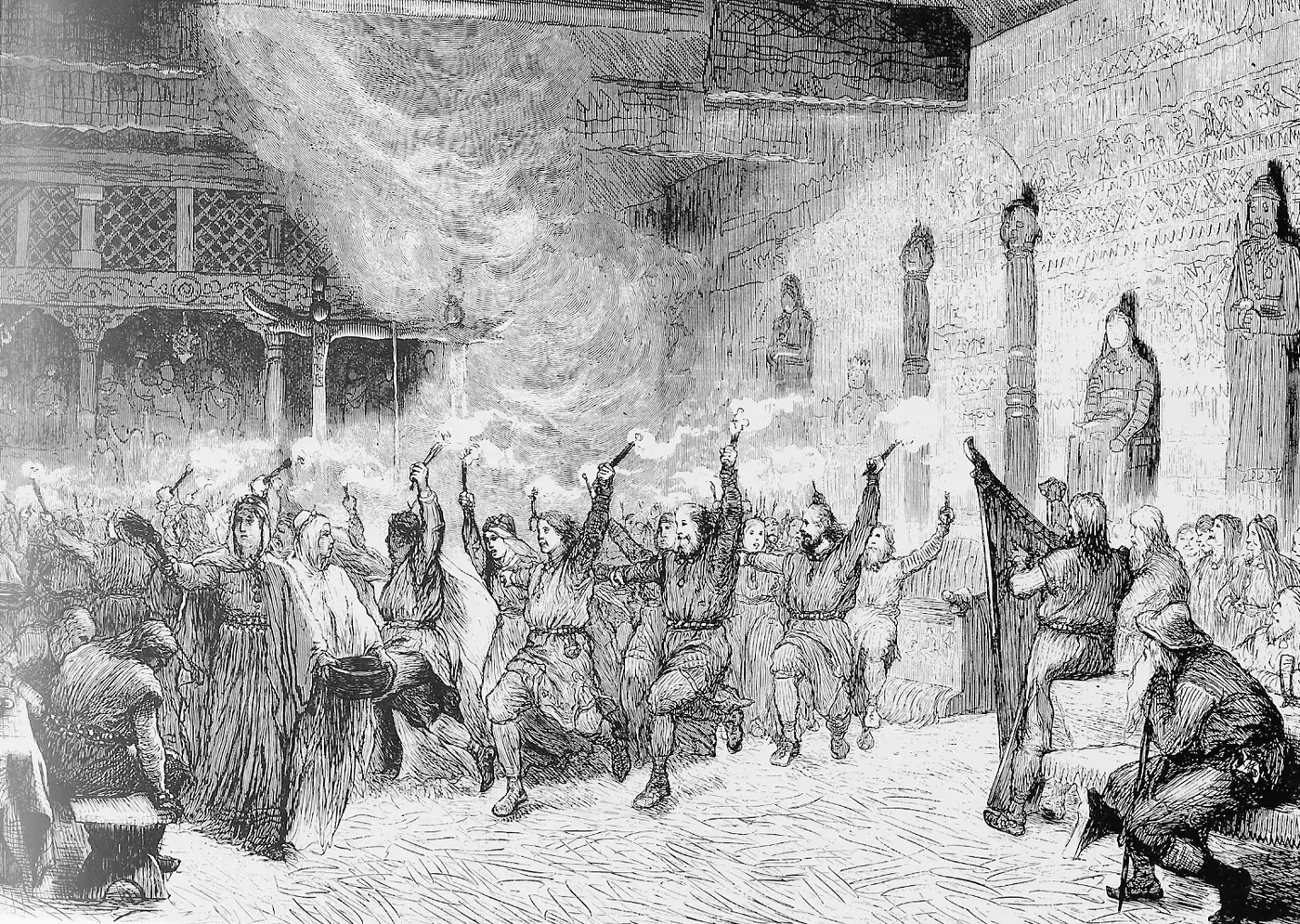
In the celebration called jóleblót people in villages gathered for a three-day feast. The Vikings went all out. There was offering to the gods, drinking a lot of ale, eat loads of good food.
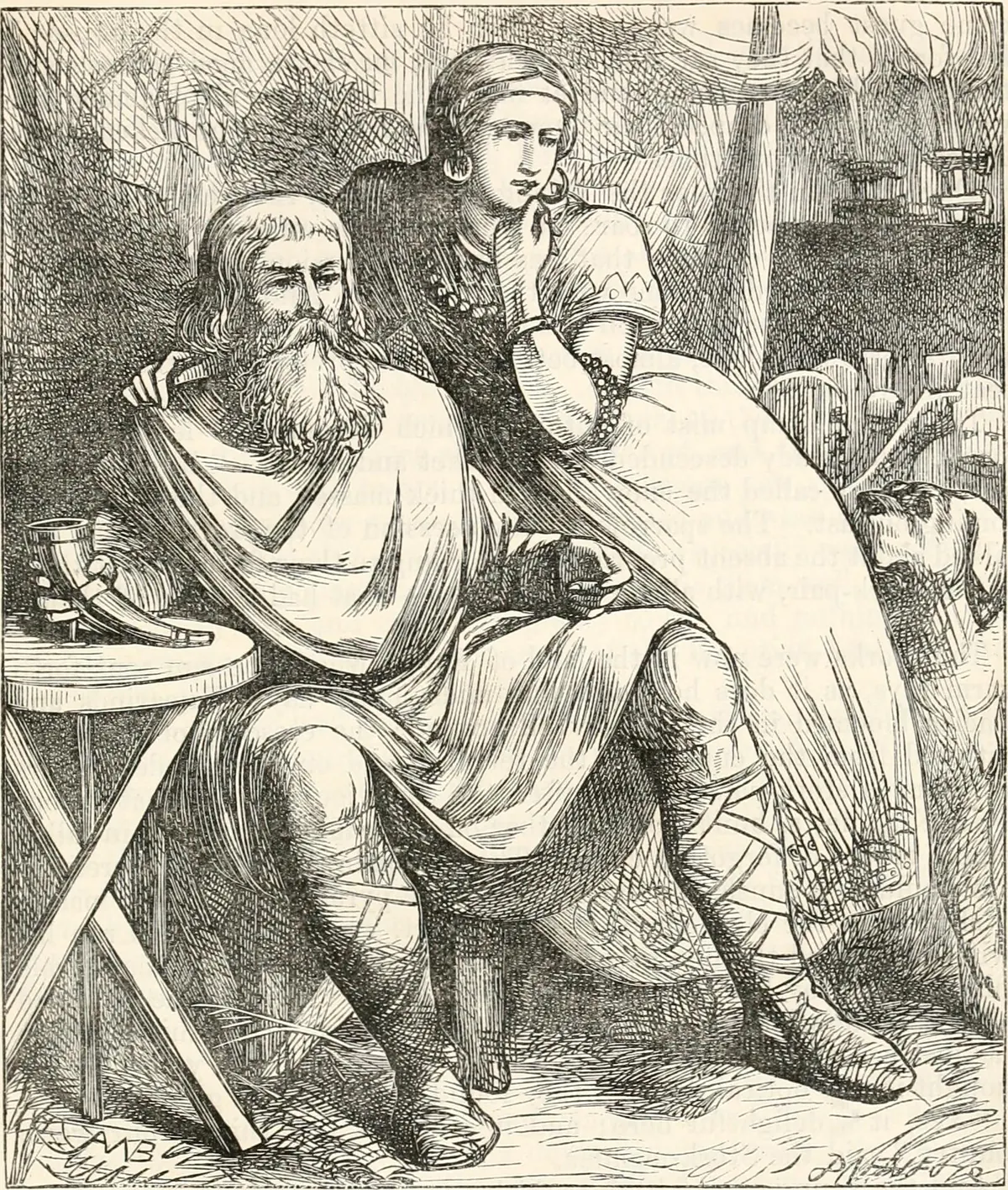
When entering the hall, one would immediately see who was the most important man in the room – the viking chief. He sat in the high seat, perhaps with his wife beside him. The prominent warriors and noblemen sat close by. Those of lesser rank were placed farther away from the chieftain, so the social hierarchy was very visible.
In Hákon the Good’s Saga, the skald (poet) Snorre describes how a traditional blót feast was carried out. All the farmers nearby gathered at the hov. A hov is a type of building used for Norse religious worship during the Viking Age. It could be a longhouse or an outdoor sacred site.
The farmers were to bring provisions enough to last for the entire duration of the blót. And at the feast, everyone was expected to have ale. Skål!
Snorre wrote that all sorts of “small livestock and horses” were slaughtered, and all the blood that flowed from them was called laut. The bowls that held this blood were called laut-bowls. Then, using sprigs or bundles of twigs, they were to “redden the stalls (the altars) and likewise the walls of the hov both outside and inside, and also sprinkle it upon the people.”
The meat was to be cooked. There were hearths set in the middle of the floor of the hov, and kettles hung above them. The Viking chief was to “bless the cup and all the sacrificial food.”
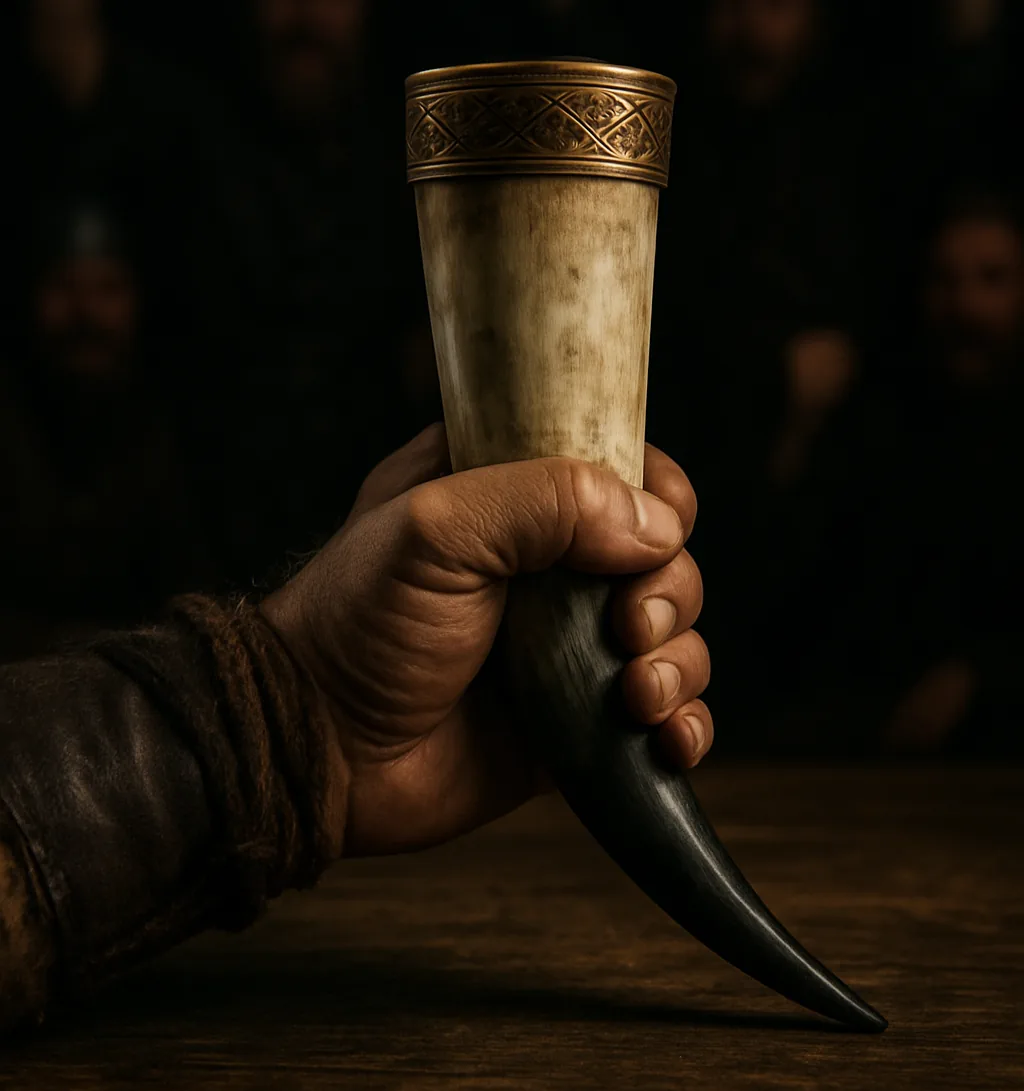
After this, it was time for toasts. Lots of them. First, according to Snorre, they were to bless Odin’s cup and drink for victory and power. Then they were to drink Njord’s and Freyr’s cups for a good year and peace. It was also customary to drink Bragi’s cup, to remember one’s departed friends, the poet wrote.
The oldest written source for the pagan Yule celebration is Haraldskvadet. It was most likely composed around the year 900 for King Harald Hårfagre (Harald Fairhair). The poem includes these lines:
Úti vill jól drekka,
ef skal einn ráða,
fylkir enn framlyndiok
Freys leik heyja;
Haraldskvadet, c. 900He wishes to drink Yule outdoors,
if he alone may decide;
the bold-minded king,
taking part in Freyr’s game.
When the poem says “outdoors,” it refers specifically to being out at sea, and the expression “Freyr’s game” means battle. The king was sick and tired of being indoors mid-winter. He needed to fight and drink!
Yule was a time of big contrasts. Celebrating, cheering and eating like there was no tomorrow. On the other hand, the fear that real bad things might happen in the dark season. Like Åsgårdsreia.
Åsgårdsreia – When the Dead Rode Through the Night
People feared Åsgårdsreia, also called the Ride. This was a terrifying host of the dead, trolls, and other scary, dangerous beings that swept through the air and could wreak havoc upon people and livestock alike.
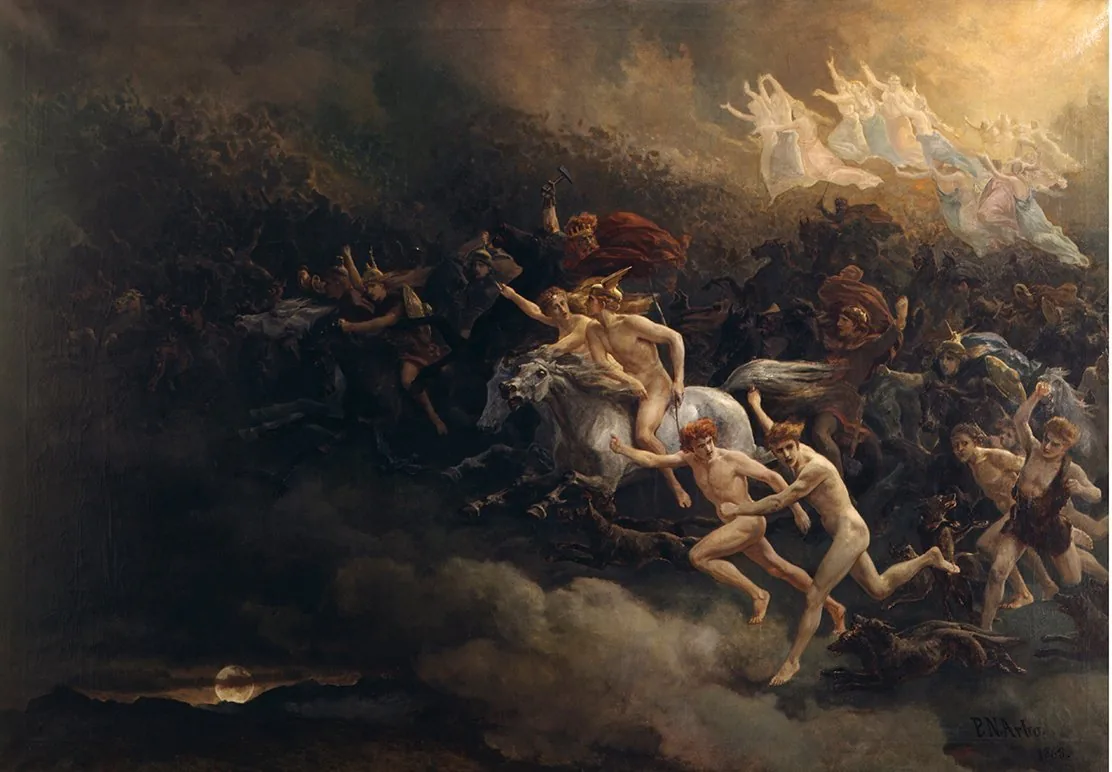
Also, the night of December 13th –Lussinatta– was especially dangerous. On that night, the boundary between worlds was thin.
It was commonly believed that the dead returned on Yule night. The tradition of leaving the Christmas food out on the table and having the household sleep in hay on the floor was said to make room for the dead. Because this night it was they who would lie in the beds and eat from the food during the night.
That Yule feeling… Creepy!
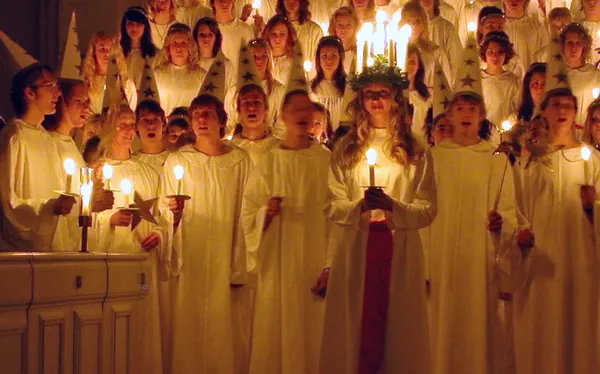
From Blót to Christ Mass
When Norway was Christianized, jól continued as jul. But now as the celebration of the birth of Christ instead of the Norse gods.
Still, the transformation took time. For several generations, both blót and Christ Mass were celebrated side by side. Old customs didn’t just fade away like that, and the midwinter feast was far too important to abandon at once. Only in the 11th century was blót finally forbidden.
Have a great Yule, folks!
The Viking love affair with Christmas beer has survived for a thousand years. Discover the dark, malty tradition that still warms Norwegian winters.
Read the story